





Isn’t Sound Incredible?
Our world of sound is one of the most intricate and awe-inspiring experiences we can have. Vibrations transform into rich acoustic spaces, filling our lives with moods and atmospheres that words alone can’t fully capture. Sound transcends intellect, connecting us deeply to our emotions and anchoring us to moments that define our lives.
A favorite song can uplift us, children’s laughter can spark joy, and the soft whisper of a loved one can soothe the soul. Everyday sounds—the hum of a fan, the crackle of a fireplace—bring comfort and warmth. In contrast, a roaring stadium crowd or an energetic beat can flood us with adrenaline, infusing us with energy just when we need it most.
But sound is a double-edged sword. A gentle rain can calm our nerves, while a sudden bang in a horror movie can jolt us with fear. Sounds can ground us, making us hyper-aware of our surroundings, or lift us into states of awe and inspiration—think of a choir’s powerful harmonies or a waterfall’s thunderous roar.
Sound doesn’t only influence the present. It connects us to our past and future. An old song can transport us back in time, while the suspenseful rise in a film score can fill us with anticipation. Sound is memory, emotion, and expectation all in one.
Our ability to hear has been pivotal in the evolution of human society. Language, music, storytelling—all have propelled our civilizations forward. Beyond words, paralinguistic cues like tone, pitch, and pacing enrich our communication, revealing emotions, intentions, and nuances that spoken words alone can’t convey.
Imagine a world without these auditory layers. A society stripped of paralinguistic cues would lose much of the depth and efficiency in communication we take for granted. Our shared culture, knowledge, and connections have all flourished because of our capacity to hear.
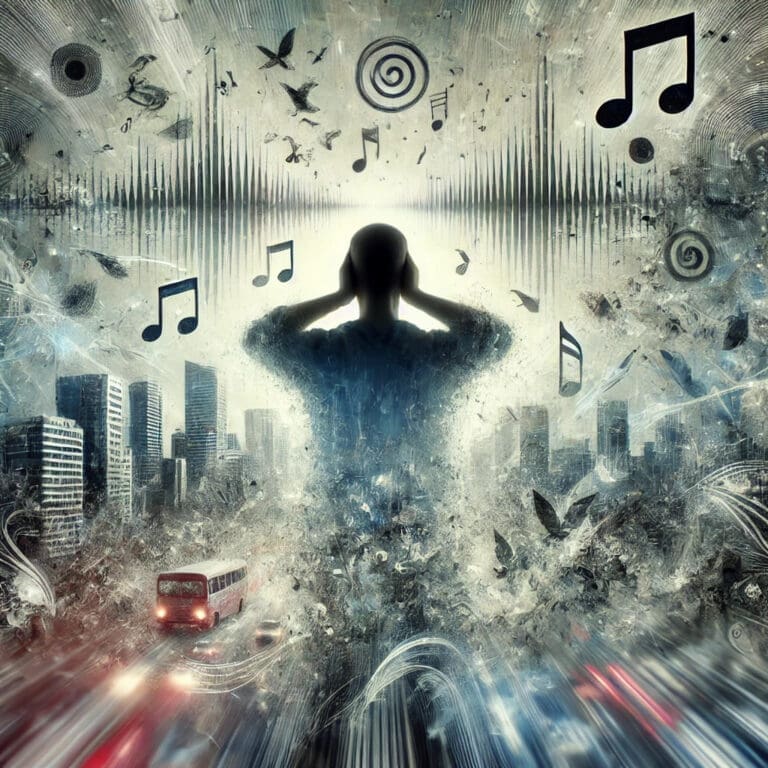
Now, picture this: You float above your neighborhood, your hearing heightened to supernatural levels. Every sound is crystal clear—you tune into a couple whispering bedtime stories, a heated argument, the joyful chaos of a party. You hear the hum of engines below, the buzz of cicadas in the grass, the electric pulse within a traffic light.
Your awareness expands. You pick up radio waves—classical music, Latin rhythms, talk shows, urgent emergency calls, and quiet confessions of love. You hear laughter, sorrow, life’s monumental moments and its mundane routines, all blending into a vast sonic tapestry.
As you ascend further, you hear it all: political debates across the globe, babies’ first cries, the soft sighs of someone’s final breath. The entire spectrum of human experience, resonating through sound.
Sound is not just a backdrop to life—it is life. It binds us to our world, to each other, and to ourselves. Protecting and valuing this sense is not just about hearing; it’s about preserving the richness of what it means to be human.
Because, truly, isn’t sound incredible?
But our hearing is fragile.
Sound is one of the most remarkable forces in the natural world, a universal language that transcends species and ecosystems. For humans, the ability to hear connects us deeply to life itself—from the laughter of loved ones to the rustling of leaves in the wind, to music that stirs our souls.
But our hearing is fragile. Exposure to loud noises, aging, illness, and other factors can damage the delicate structures of our ears, leading to hearing loss. This not only affects our ability to communicate but also severs a profound link to the world around us.
The tragedy is that, unlike some creatures who can regenerate damaged hearing cells, humans currently cannot. The tiny hair cells in our cochleas, once damaged, do not regrow. Current treatments, like hearing aids and cochlear implants, help manage the symptoms, but they do not restore hearing to its natural brilliance.
We must go beyond merely protecting what remains—we need to restore what has been lost. The human auditory system is a marvel of nature, capable of extraordinary sensitivity and nuance. Artificial devices, while lifesaving for many, still fall short of replicating this complexity.
That’s why we advocate for a bold new direction: investing in groundbreaking research aimed at true hearing restoration. By supporting scientific advancements, we can work towards a future where hearing loss isn’t just managed—it’s cured. A future where the natural wonder of hearing can be fully restored for everyone.

Hi, this is a comment.
To get started with moderating, editing, and deleting comments, please visit the Comments screen in the dashboard.
Commenter avatars come from Gravatar.